
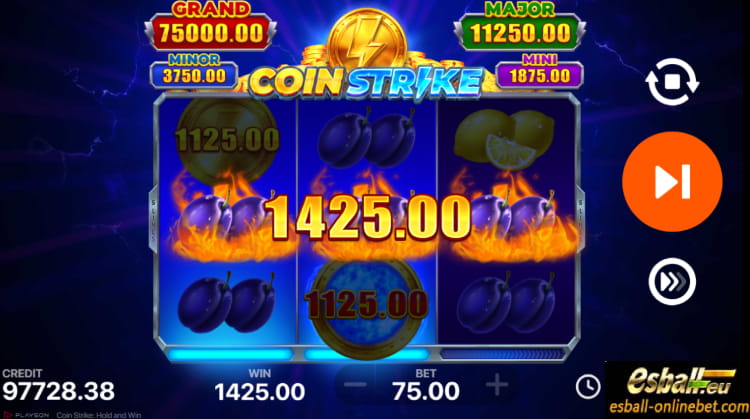
I have spent countless hours playing reels across hundreds of online slots, Coin Strike Hold and Win Slot gambling site, and the provider behind the game often reveals more about what to expect than the theme itself. Knowing slot providers transforms you from a casual player into an informed one who understands where the real value is. I want to share what I have picked up about these creative powerhouses so you can make smarter choices. Each studio adds a distinct fingerprint to its games, from mathematical models to bonus design philosophy. Let me guide you through everything that matters when you look beyond the shiny graphics and start checking the developer label on a slot.
RTP, Volatility, and Co skutečně znamenají
Procento návratnosti hráči is nejčastěji uváděným statistic in online slots, and also one of the most misunderstood. A slot with 96 percent RTP means that over millions of spins across all players, the game returns roughly 96 pounds for every 100 pounds wagered. This tells me nothing about what will happen during my hour-long session. I treat RTP as a long-term fairness indicator rather than a short-term prediction tool. A 96 percent game can drain my balance in twenty minutes or double it, and both outcomes are perfectly consistent with the stated RTP.
What concerns me more practically is that providers increasingly offer their games in multiple RTP configurations. The same slot might run at 94, 95, or 96 percent depending on which casino operator hosts it and which market regulations apply. I always check the game rules screen or the provider’s official documentation before committing real money. A few percentage points difference might sound trivial, but over the course of a year’s play, the effect on my returns compounds dramatically. This operator-selectable RTP practice is entirely legal and widely used, so I make checking it a non-negotiable habit.
Dispersion, also known as variance, describes how the game distributes its payouts over time. Low volatility games provide frequent small wins that maintain the balance ticking along, suited to extended sessions or clearing wagering requirements. High volatility slots can go stone-cold for long periods before providing a single massive payout that renders the wait worthwhile. I align volatility to my session goals rather than blindly seeking the biggest possible multipliers. When I possess an hour and a limited budget, a medium-volatility game suits me more than a high-volatility monster that may never wake up during my available window.
Payout Frequency and Session Planning

Hit frequency is the less-discussed sibling of RTP and volatility, and I hope more providers published this number openly. It reveals to me what percentage of spins will generate at least one winning combination, irrespective of size. A game with 25 percent hit frequency means roughly one in four spins yields something, even if that something is tiny. When I am aware of this number, I can gauge how long a given bankroll might hold out based on my bet size and how long I can stand watching my balance decline between wins. Games with low hit frequency demand larger bankrolls and stronger psychological fortitude.
I organize my sessions around these three interconnected variables for every new slot I test. First, I check the RTP and observe whether the casino is running a reduced configuration. Second, I measure the volatility either from the provider’s available information or from community gameplay data. Third, I estimate the hit frequency by playing a few dozen demo spins and tracking how many return any win at all. This ten-minute reconnaissance tells me whether the game fits my current mood, budget, and time constraints. Omitting this step has lost me money more times than I care to admit.
Bonus Features and The Way Providers Set Apart Their Games
Free spin rounds are the backbone of slot bonus features, but the way different providers apply them varies widely. Some studios, like NetEnt, offer me a set number of spins with a predetermined multiplier and maybe an growing symbol. Others, especially the high-volatility specialists, construct multi-layered free spin features with gathering mechanics, increasing multipliers, and re-trigger possibilities that can prolong the bonus indefinitely. I pay close attention to how a provider structures their free spins because this feature constitutes the majority of a slot’s entertainment value and payout potential.
The scatter symbol activates free spins in most games, and the number necessary usually goes from three to five across the reels. Some providers make their scatters show up teasingly often, dangling https://en.as.com/other_sports/how-much-money-will-tyson-fury-and-oleksandr-usyk-make-for-their-fight-in-saudi-arabia-n/ the bonus just out of reach, while others appear to overlook they designed scatter symbols at all. I have developed a basic feel for trigger frequency across different providers through sheer repetition. Games where I regularly see two scatters land on a spin are inclined to offer bonus rounds more frequently than those where scatters feel like rare events.
Wilds and multiplying wilds bring another layer of game provider variety. Basic wilds replace payout symbols to create winning combinations, which is simple enough. But when a studio incorporates multiplier wilds that increase twofold, triple, or even boost wins by ten times or more, the overall feel shifts. I love games where multiplier wilds can merge during free spins, because the compounding effect generates truly exciting payout spikes. Nolimit City and Push Gaming achieve this particularly well, though their games demand patience during the typically tough base game preceding those moments.
Progressive Prizes and Fixed Jackpot Structures
Progressive jackpots tie multiple machines or entire networks to gather a portion of every wager into a growing prize that one lucky player eventually claims. Studios including Microgaming built their early reputations on progressives, with Mega Moolah turning into iconic for creating millionaires. I realize that a small percentage of every bet adds to the jackpot pool when I play a progressive slot, which means the base game RTP is usually lower than a similar non-progressive game. This exchange only makes sense if I value the lottery-style opportunity at the big prize.
Fixed jackpot systems, like the Hold and Win feature I talked about earlier, offer fixed maximum prizes rather than pooled contributions. These jackpots appear more reachable since they exist inside the game’s own mathematical structure instead of requiring contributions from thousands of other participants. Companies like Playson and Pragmatic Play have invested substantially in fixed jackpot slots, and I usually favor them for my regular gaming. The transparency of knowing precisely what a jackpot is valued at, rather than seeing a number tick upwards, fits more effectively with how I enjoy to manage my gaming time.
How I Assess a Novel Provider Beforehand Playing
I follow a rapid checklist ahead of depositing real money every time I find a slot from a provider I haven’t played previously. To start, I search for the provider’s regulation information and audit certifications. Reputable studios prominently display their regulatory body credentials and independent auditor badges. The omission of this information does not automatically mean a provider is dubious, but it leads me toward demo play and rather than real-money deposits. The UK market is strictly regulated, and providers targeting UK players must meet strict standards, which provides me a starting point of confidence.
I then load the demo version and dedicate at least fifty spins simply watching the game’s flow. I track how many spins yield any win at all, record the rough size of base game wins in relation to my stake, and monitor how often bonus symbols or scatters occur. This direct sampling shows me greater insight about the game than any published RTP figure ever could. I also confirm whether the provider provides a bonus buy option and at what cost multiplier, because this accessibility counts for my preferred style of play when time is restricted.
Player feedback analysis forms the final step of my review process. I check what other players are discussing on forums and review sites, focusing closely to comments about withdrawal delays or frequent technical glitches. No provider is perfect, but trends of steady problems across multiple players give me pause. I also look for gameplay videos on streaming platforms because observing another player’s hundred-spin session uncovers the game’s character far better than a unchanging review page ever could. This three-step process needs maybe fifteen minutes and has saved me from numerous poor deposits on games that simply were not built for how I like to play.
Smartphone Experience and Software Quality
The operational quality of a provider’s mobile version matters enormously because I play the large majority of my slots on my phone. Some studios, like ELK Studios and NetEnt, build their games mobile-first, guaranteeing that buttons are correctly sized for thumb access and that battery drain stays reasonable during extended sessions. Others seem to convert their desktop games to mobile as an secondary consideration, resulting in tight interfaces and sluggish performance. I always check a new provider’s game on mobile before gaming on desktop, because a poor mobile experience disqualifies the game from my regular rotation regardless of how good the maths might be.
Performance consistency during bonus features is yet another litmus test I employ ruthlessly. Nothing infuriates me more than triggering a hard-earned free spins round only for the game to crash mid-feature, keeping me in doubt whether my session state was properly saved. Top-tier providers implement robust state-saving that restores bonus rounds exactly where they left off after a connection interruption. Weaker providers sometimes lose your bonus entirely, and I have learned to avoid those studios completely. The ability to gracefully handle real-world network conditions separates professional slot developers from amateurs pursuing quick profits.
Wagering Options, Max Wins, and Bankroll Management
The bet range a provider uses on a slot indicates a lot about their target audience. Games with lowest stakes starting at 10p attract casual players and those wanting extended low-risk sessions. Slots where the lowest begins at 50p or £1 indicate higher volatility expectations and larger bankroll requirements. I always review the bet range before launching a slot because it instantly reveals whether the provider crafted this game for my budget tier. There is no point in enjoying a slot’s design if the minimum spin is above I am comfortable wagering per round.
Maximum win potential has become a marketing arms race among slot providers, with figures now commonly promoted in the tens of thousands of times your stake. I view these figures as theoretical ceilings, not realistic expectations. A 50,000x max win seems amazing in a press release, but the probability of actually reaching it is astronomically small. What is more important to me is the distribution of wins within the more achievable range. Some providers focus rewards in rare mega-wins, while others offer better chances at hitting solid 500x to 1,000x outcomes during bonus rounds.
I organize my bankroll management around a provider’s volatility profile rather than chasing the headline max win figure. For high volatility games from providers like Nolimit City or Push Gaming, I budget at least 200 times my chosen bet size to give myself a reasonable shot at reaching a bonus feature. For medium volatility slots from NetEnt or Red Tiger, I can manage with 100 times my bet and still look forward to an engaging session. These are not promises, just recommendations I have developed through prolonged play, and they have greatly improved how long my deposits last.

Stake Sizing and Session Duration
Choosing the right stake size for a provider’s game requires truthful self-assessment about what I desire from the session. If I am playing a high-volatility Pragmatic Play slot with a 5,000x max win, betting 20p means I am playing for entertainment with a theoretical ceiling of £1,000, which is perfectly fine. Betting £2 on the same game means I am gambling significantly more per hour for a shot at £10,000. The provider’s maths do not change with my bet size, but my financial exposure definitely does, and I have learned to scale my stakes to match both the volatility and my personal loss tolerance.
Gaming session length is another variable that providers inadvertently shape through their game design. Games with frequent payouts and stable returns automatically lengthen my playing time because little returns go back into my balance. Volatile slots eat up my budget more quickly during unlucky runs, so I either decrease my bet size on these games or embrace shorter sessions as part of the gaming routine. I have found that adjusting my bet size to the target session length I want, given the provider’s usual maths profile, leads to far more satisfying outcomes than selecting a fixed number like £1 and hoping for the best.
Why the Studio Counts More Than the Theme
I chased games inspired by movies, mythology, or anything that had a dragon on the cover when I first started playing online slots. It took me about six months of inconsistent results to realise I was doing it backwards. The provider dictates the mathematical backbone of every game: the return to player percentage, the volatility profile, and how often bonus features actually trigger. A Norse mythology slot from one studio can play completely differently from another studio’s Viking adventure. I now treat the developer logo as my primary filter.
The engine underneath the artwork shapes your entire session experience. Some providers develop games that deliver frequent small wins to keep your balance ticking over, while others create high-volatility beasts where you might spin dead for twenty minutes before a bonus round lands. Knowing which studio made a slot helps me predict the rhythm of play before I wager a single penny. I find this particularly useful when I want a relaxing evening versus when I am hunting a big multiplier.
Licensing and certification also run through the provider, not the game title. Trustworthy studios present their maths models to independent testing houses like eCOGRA or iTech Labs. I am more at ease depositing real money when I identify a provider with a solid track record of fair, audited games. The theme is the shop window, but the provider is the entire factory behind it, and I would always rather know the factory is well-built before I step inside.
The Mathematical Fingerprint
Every provider has a mathematical fingerprint that runs through its portfolio like a signature. Pragmatic Play tends toward high volatility with 96-percent-ish RTP configurations and bonus buy options. Playtech often builds games with networked progressive jackpots layered onto solid base games. I have learned to spot these patterns because they repeat across dozens of titles. Once you detect a provider’s comfort zone with volatility, you can shortlist their games that match your personal risk appetite without needing to test every single one blindly.
The fingerprint extends to hit frequency rates, which almost no casino advertises but which I feel keenly during play. Some developers engineer their slots to land winning combinations on thirty percent of spins or higher, while others let you ride long losing streaks to fund massive potential payouts. The difference between a NetEnt game and a Nolimit City game on this metric alone is night and day. I pay attention to how each studio paces its action because it directly affects my enjoyment and session duration on a fixed budget.
FAQ
How do I find out which provider developed a specific slot game?
The vast majority of online slot shows the developer logo during the loading screen, and the information is invariably available in the game’s help or info menu. I press the menu button, typically represented by three lines or a gear icon, and search for an “About” or “Game Info” section that displays the provider name and licensing details. Casino lobbies also often have a filter by provider option, which renders browsing a studio’s entire portfolio quick and straightforward.
Does the slot provider impact my chances of winning?
Yes, but in an indirect way via the mathematical model the provider incorporates into the game. Each provider determines their own RTP ranges, volatility profiles, and hit frequency targets. These parameters directly shape your session experience and long-term expected returns. Two slots with matching themes but different providers can play radically differently. I always prioritise the provider’s reputation for fair, certified maths over surface-level factors like graphics or theme when performing my game selection.
Can I trust smaller or newer slot providers?
Smaller providers can produce excellent games, but I exercise stricter scrutiny before depositing. I check their licensing jurisdiction, seek independent testing certification, and dedicate significant time in demo mode watching the game’s behaviour. Newer studios sometimes bring fresh approaches in ways the established players do not, which is exciting. The key is ensuring they meet the same regulatory standards as the big names rather than believing every provider with a flashy website functions legitimately.
Why do matching slot games feature different RTPs at different casinos?
Many providers develop their games with configurable RTP settings that casino operators can select when integrating the slot. A game might be available at 94, 95, or 96 percent RTP configurations, and the casino selects which version to offer. This practice is fully legal and disclosed in the game rules. I always check the specific RTP displayed in the information panel at the casino where I am playing, because it can vary meaningfully from the maximum the provider promotes on their own website.
Comprehending Game Mechanics Between Providers
Slot mechanics have progressed far beyond the simple three-reel fruit machines that launched this entire industry, and different providers have established their reputations on specific mechanical innovations. I deem it helpful to classify games by their core engine rather than their visual theme, because the engine determines how wins form and how bonus features behave. Once you understand the major mechanical categories, you can examine any new release and immediately understand what kind of experience awaits. This knowledge has saved me from countless disappointing sessions where the theme promised excitement but the mechanics delivered frustration.
The classic payline system still dominates many games, where winning combinations must land on fixed lines running left to right across the reels. Providers like Play’n GO create brilliant games on this traditional framework, proving that you do not need a revolutionary engine to create a compelling slot. I actually favor payline-based games when I want to grasp exactly how much each spin costs and where my wins are coming from. The transparency of seeing lit lines across the reels provides me a clearer picture of the game’s mathematics than the sometimes opaque ways-to-win calculations.
Cluster pays mechanics, popularised by NetEnt’s Aloha and perfected by Play’n GO’s Reactoonz series, eliminate paylines completely and in their place give payouts for groups of adjacent matching symbols. This method shifts how I judge every spin because position counts far more than sequence. A cluster of five symbols packed together awards no matter where they sit on the grid. I notice these games tend to build momentum uniquely, often using cascading wins where successful clusters are removed and new symbols fall in to in some cases create chain reactions.
Hold and Win, Megaways, and Bonus Purchase Systems
The Hold and Win mechanic has become so pervasive across multiple providers that it almost constitutes its own sub-genre. Games trigger a respin feature where special bonus symbols stay fixed, and you receive three respins that renew whenever a new symbol appears. The goal is covering the entire grid or gathering enough value symbols to achieve substantial multipliers. I have seen brilliant implementations from Playson, where the mechanic comes across as tight and rewarding, and lazy implementations where the feature kicks in so rarely it becomes frustrating. The provider’s skill at tuning trigger frequency with payout potential makes an enormous difference here.
Megaways slots fundamentally change the dimensional mathematics of every spin by varying the number of symbols on each reel. A single spin could offer between a few hundred to over one hundred thousand ways to win depending on the random reel heights. This variability generates a sense that anything can happen on any spin, which I find exciting when paired with cascading wins. But I have also observed that Megaways games are prone toward high volatility irrespective of the provider, because the massive way counts must be balanced by lower hit frequencies to maintain viable maths models.
The bonus buy feature, offered by many providers including Pragmatic Play and Nolimit City, lets me pay a fixed multiplier of my stake to jump immediately into the bonus round rather than waiting for it to trigger organically. This costs anywhere from 40x to over 100x the base bet according to the game’s maths. I use this prudently because buying bonuses changes the effective RTP of my session significantly. Some providers include bonus buy payouts in their stated RTP calculations, while others do not, and this lack of consistency frustrates me. Always check whether the quoted RTP applies to base game play or includes bought bonus contributions.
The Major Players and Their House Styles
The digital slot market has consolidated around a few major developers, and I would like to give you a candid overview of the brands you will see most often. These are not merely brands on a loading screen; they reflect different philosophies about what a slot should be. I have tried at least twenty titles from each of the top studios, and patterns emerge quickly once you start paying attention. Understanding their house styles will prevent you from blindly trying games that fundamentally do not suit how you enjoy playing.
NetEnt remains one of the most recognisable names in the industry, and for good reason. Their slots tend toward medium volatility with polished visuals and soundtrack design that seems top-notch. Games like Starburst and Gonzo’s Quest shaped entire eras of online slots. I find NetEnt titles very reliable when I need a balanced session where bonus features appear reachable rather than mythical. Their maths models seldom penalize you excessively during base game play, which makes them an excellent starting point for newer players gaining experience.
Pragmatic Play has become the major player of the industry, releasing games at a pace that frankly astonishes me. Their portfolio spans from medium to very high volatility, with the Hold and Win mechanic showing up frequently across their catalogue. I anticipate crisp mobile performance, dynamic bonus buy options, and maximum win potentials that often reach into five-figure multiples when I load a Pragmatic slot. Their games benefit patience but require a bankroll that can handle the swings common to their chosen volatility profile.
Innovators and Niche Specialists
Several studios focus in pushing boundaries in ways that totally change how I feel about slots. Nolimit City deserves special mention here because they have crafted their entire reputation on ultra-high volatility and truly unsettling themes. Their xNudge, xWays, and xSplit mechanics create combinatorial chaos that can produce wins exceeding 30,000 times your stake. I handle their games with a specific budget and a specific mindset, knowing that I might see absolutely nothing for fifty spins and then watch the reels explode.
Big Time Gaming fakticky vytvořil Megaways engine, který nyní poskytuje na licenci řadě dalších providerů. Mechanismus měnící se výšky válců generuje až 117,649 způsobů k výhře na každé otočení a princip kaskádových válců propojuje výhry do vzrušujících sekvencí. Když vidím logo Megaways na automatu, tuším, že čeká mě nepředvídatelné rozložení válců, kde každé otočení může teoreticky nabídnout jiný počet výherních cest. Systém funguje skvěle, ale vždy ověřuji, zda provedení vychází přímo od Big Time Gaming nebo od licencovaného studia, protože diference v kvalitě může být výrazný.
ELK Studios přináší mobilně-first designovou filozofii a sofistikované sázkové strategie integrované přímo do svých her. Jejich X-iter funkce mi dovoluje přeskočit přímo do různých herních režimů s proměnlivými cenovými multiplikátory, což považuji jako užitečné, když mám na mysli konkrétní strategii lovu bonusů. Jejich matematické modely mají tendenci oceňovat metodickou, trpělivou hru spíše než riskantní přeskakování sázek. Cením, že přemítají o tom, jak skuteční lidé spravují se svými session rozpočty, spíše než jen pronásledují největší teoretická čísla pro marketingové screenshoty.